What’s the Anion Gap?
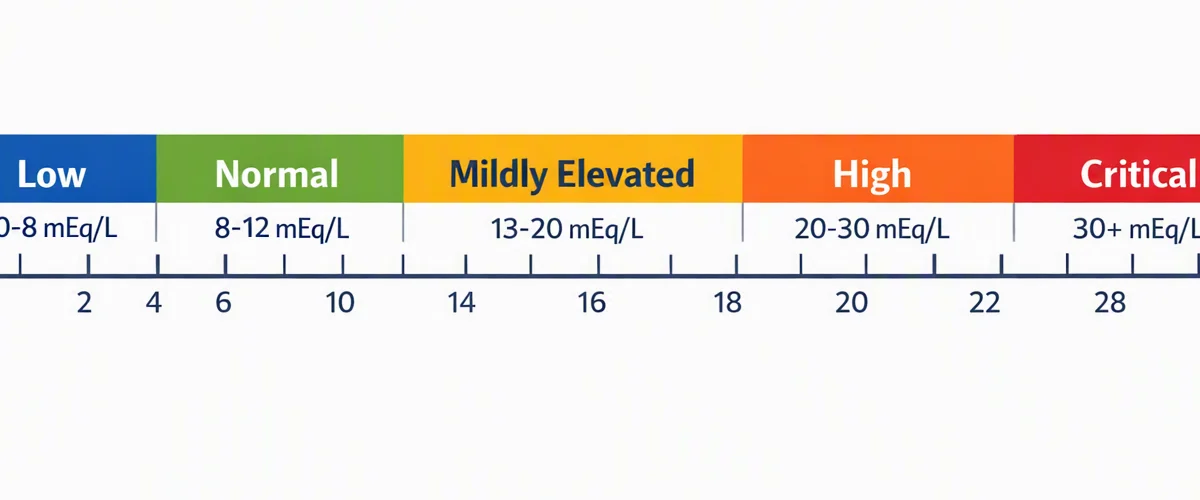
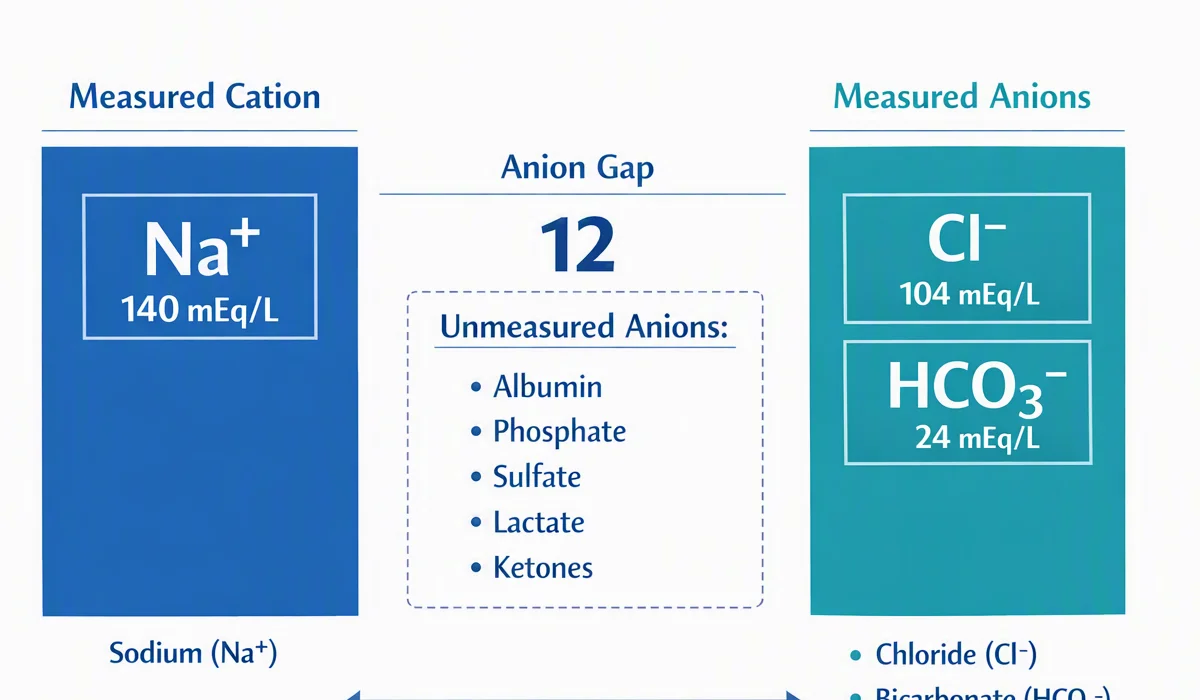
The anion gap value is a calculated value that helps clinicians assess the balance of electrolytes in the blood. It is usually calculated from sodium, chloride, and bicarbonate values on a basic or comprehensive chemistry panel. Because some charged particles are not directly measured, the anion gap serves as a clue to whether there are hidden acids accumulating in the bloodstream.
A above-normal result suggests an elevated anion gap, which typically suggests excess acid from organic acids, toxins, or impaired clearance. In plain language, high anion gap metabolic acidosis means the body has too much acid and not enough buffering capacity, usually reflected by low bicarbonate and changes in blood pH.
One important factor is albumin, the main unmeasured negatively charged protein in plasma. Lower albumin can make the anion gap look artificially normal, so albumin correction is often needed for accurate clinical interpretation. That is why the anion gap should always be viewed in the context of the full lab picture, not as a standalone number.
How an Anion Gap Calculator Helps Identify Metabolic Acidosis
An Anion Gap Calculator helps turn a set of lab values into a valuable clue for diagnostic evaluation. By inputting sodium, chloride, and bicarbonate, the calculator calculates whether the blood chemistry pattern supports metabolic acidosis and whether the gap is elevated. This is especially helpful when the issue is not just acid excess, but a distinct type of acid-base disorder.
In practice, an Anion Gap Calculator is used alongside the full blood chemistry panel, an arterial blood gas, and the patient’s symptoms. A low bicarbonate value alone does not explain the cause. The calculator helps distinguish ordinary bicarbonate loss from acid accumulation due to lactate, ketones, toxins, or reduced kidney clearance.
For clinicians, the calculation supports a stepwise approach:
- Confirm true metabolic acidosis with bicarbonate and blood pH. Find out whether the anion gap is elevated. Evaluate respiratory compensation on arterial blood gas. Review the patient for toxin exposure, kidney dysfunction, shock, or infection. Use albumin correction and, when needed, the delta gap to refine interpretation.
This kind of organized review matters because high anion gap metabolic acidosis can indicate a life-threatening condition. The calculator does not take the place of clinical judgment, but it makes the pattern easier to recognize quickly.
Frequent Causes of Elevated Anion Gap Metabolic Acidosis
The most common causes of high anion gap metabolic acidosis are conditions that boost acid production or reduce acid excretion. These typically include lactic acidosis, ketoacidosis, renal failure, and toxic alcohols. Every one causes a different clinical pattern, but all can create an elevated anion gap.
Figuring out the cause begins with asking what type of acid is rising. Is it lactate from poor perfusion? Ketones from accelerated fat metabolism? Retained acids from uremia? Or a poison that metabolizes into organic acids? That differential diagnosis determines treatment and urgency.
Lactate Acidosis
Lactic acidosis develops when lactate accumulates faster than the body can clear it. This is often related to shock, sepsis, severe hypoxemia, or other forms of tissue hypoperfusion. When cells do not get enough oxygen, they shift toward anaerobic metabolism, which raises lactate production and lowers pH.
This cause is important because it often signals a serious underlying illness rather than a primary metabolic problem. A rising lactate level may accompany fever, low blood pressure, altered mental status, or organ dysfunction. In many cases, the anion gap is one of the first clues that something is wrong before the full picture becomes obvious.
Diabetic, Alcohol, and Starvation Ketosis
Ketoacidosis occurs when the body produces excess ketones, which are acidic byproducts of fat metabolism. The classic form is diabetic ketoacidosis, but alcoholic ketoacidosis and starvation-related ketosis can also raise the anion gap. In all of these, the body is in a state of insufficient usable glucose, leading to increased ketone production.
Diabetes is an important risk factor because insulin deficiency allows fat breakdown to accelerate. Alcohol use can contribute through poor intake, vomiting, and altered metabolism. Starvation or prolonged fasting can also drive the body toward ketone generation. In these situations, the acidosis may be linked by dehydration, abdominal pain, vomiting, or rapid breathing as the body tries to adjust.
Kidney Failure and Uremia
Renal failure can cause high anion gap acidosis because the kidneys are no longer able to clear acid effectively. As kidney function worsens, acid retention leads to uremia, another common cause of an elevated gap. In many cases, the blood test pattern includes a rising creatinine, abnormal potassium, and other signs of renal impairment.
When chronic kidney disease progresses, the body accumulates nonvolatile acids that should normally be excreted in urine. That acid https://anion-gap-test673.publishlane.com/posts/anion-gap-calculator-and-reference-range-explained buildup contributes to metabolic acid buildup and a lower bicarbonate level. Clinicians often look for this cause when a patient has known kidney disease, reduced urine output, or symptoms suggesting long-standing renal dysfunction.
Poisonings and Toxic Ingestions
Several toxins can create a dangerous high anion gap pattern. Methanol and ethylene glycol are the classic toxic alcohols, and both can be metabolized into acidic compounds that sharply increase the anion gap. Salicylates are another important cause because they can trigger mixed acid-base abnormalities and raise acid levels.
These cases are especially concerning because they may present with neurologic symptoms, visual changes, vomiting, or rapid breathing before the diagnosis is obvious. A careful history of possible exposure is critical. In many cases, the combination of an elevated gap and the clinical scenario should warrant immediate treatment while confirmatory testing is underway.
Less Common Causes to Think About
Not every elevated result comes from the most familiar reasons. Less common causes for high anion gap metabolic acidosis may include rhabdomyolysis, 5-oxoproline build-up, propylene glycol exposure, and D-lactic acidosis. These diagnoses are easy to miss unless the clinician keeps a broad differential diagnosis.
Rhabdomyolysis can play a role through muscle breakdown and associated metabolic changes. 5-oxoproline acidosis may arise with chronic acetaminophen use in susceptible patients. Propylene glycol is occasionally present in certain IV medications and can be an unrecognized driver of gap elevation. D-lactic acidosis is less frequent but may appear in patients with short bowel syndromes or altered gut bacterial metabolism.
Such explanations matter because the patient may not fit the classic pattern of lactic acidosis or ketoacidosis. If the anion gap is elevated but the usual explanations do not fit, clinicians should review medication history, nutritional status, toxic exposures, and chronic medical conditions.
How Medical professionals Assess the finding
Understanding a raised anion gap requires more than just identifying a number. Clinicians combine the chemistry panel with an arterial blood gas to establish the degree of acidemia and measure respiratory compensation. They also evaluate whether the pattern fits a specific acid-base disorder or a mixed disorder.
One key tool is the delta gap, which helps determine whether there is an additional hidden acid-base issue alongside the elevated anion gap. For example, a patient may have both high-gap acidosis and metabolic alkalosis from vomiting, or a combined respiratory problem. This approach improves clinical interpretation and prevents missing a second disorder.
Albumin also needs careful attention. Because albumin is a major unmeasured anion, low albumin can mask the size of the gap. That is why albumin correction is often essential when the measured anion gap seems less dramatic than the clinical picture suggests.
In practical terms, the interpretation process often includes:
- Confirming metabolic acidosis with bicarbonate and blood pH. Checking for an elevated anion gap. Checking serum electrolytes and blood chemistry panel results. Evaluating lactate, ketones, creatinine, and toxin exposure. Applying the delta gap and albumin correction when appropriate.
When Increased Anion Gap Acidosis Is an Urgency
A increased anion gap result becomes far more urgent when it is paired with concerning features. Signs such as confusion, respiratory distress, or hypotension may indicate serious illness, reduced blood flow, or poisoning. In that setting, emergency evaluation is needed without delay.
This is particularly true when the suspected cause is lactic acidosis from shock or sepsis, diabetic ketoacidosis, severe renal failure, or exposure to methanol or ethylene glycol. These are never conditions to watch and wait on. They can worsen quickly and may require hospital-based treatment, fluids, antidotes, dialysis, or intensive monitoring.
Patients should seek urgent care if symptoms are severe or getting worse quickly, if there is a known ingestion, or if the lab abnormality is paired with altered mental status, rapid breathing, chest pain, or collapse. A elevated anion gap can be the first warning sign of a dangerous metabolic problem, but the surrounding symptoms determine how urgent the situation really is.
Frequently Asked Questions On High Anion Gap Metabolic Acidosis
How is defined a high anion gap?
A high anion gap commonly an outcome above the normal reference range used by the lab, but the exact cutoff can vary. Most importantly, whether the result suggests an elevated anion gap in the presence of the patient’s metabolic acidosis, bicarbonate level, and overall clinical interpretation. Since the normal range differs slightly by method, the full diagnostic evaluation carries more weight than a single universal number.
What are some of the most common causes of high anion gap metabolic acidosis?
The primary reasons are lactate buildup, ketotic acidosis, renal insufficiency, and poisonous alcohols for example methanol plus ethylene glycol. Salicylates can also be relevant. These conditions cause acid accumulation, reduced bicarbonate, and a increased gap because the body is dealing with an overload of acidic substances.
How does albumin affect the anion gap calculation?
Albumin is a key unmeasured negatively charged ion, so reduced albumin can make the anion gap seem falsely within range or less increased than it really is. This is why albumin correction is crucial when reading the result. If omitted, a clinician may miss a true high gap state, especially when other signs of metabolic derangement are present.
Can dehydration cause a high anion gap metabolic acidosis?
Dehydration alone does not usually cause a high anion gap, but it can contribute indirectly. Marked dehydration may worsen shock, decrease kidney perfusion, or heighten the likelihood of lactic acidosis and ketoacidosis. Thus while dehydration is not typically the direct cause, it can be part of the chain that leads to a dangerous acid-base disorder.
When should a high anion gap result be treated as an emergency?
This should be considered an emergency when the patient has confusion, labored breathing, dangerously low blood pressure, or other signs of serious illness, or when there is suspected toxic exposure. A high anion gap with quickly worsening severity of symptoms may indicate a serious medical condition that needs immediate emergency evaluation. The result should always be interpreted alongside the patient history, clinical examination, and labs rather than by itself.